This is probably a task for HQ but have you considered if it would be useful to also add label (cell type) if known on the connected cells, shown in the connectivity app. This might help find out what kind of cell it is based on partners with fewer clicks.
And could probably also help finding errors (type x is usually not connected to type z so have to be a merger or wrongly labeled cell)
Agree, it would be very useful. I’ve also thought about it (that HQ should add it). It might be doable via a script, but only when the lightbulbs problem is fixed. Currently it allows only up to about 60 cells to display their status. Because the fix could change the API, I’ll wait with any scripting until it’s done.
is there any way you could make a option on what too show in the action menu. For instance now i am only selecting on the hidden/visible option and would like to tempory hide the other 4 options to make the menu smaller. when working on other types of cell there might be need to use the other selections and perhaps hide the hidden/visible option
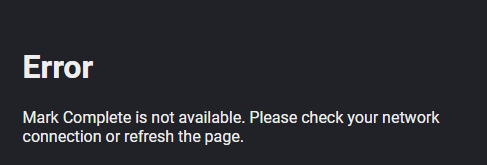
Every once in a while (I have not been able to pin down any specific times or days), I get errors that Identify/Mark Complete are not available. I get this error both with and without KK’s scripts enabled. Pictured below.
The bizarre thing is that when this happens, I am still able to access all the prod.flywire-daf links and use them to manually submit completion or identification. Just not through ngl itself.
I’ve seen this ‘clear up’ in a couple of hours (and it does not affect KK’s mass identifier) but it can be a hiccup when I am working on multiple cell types at once (or even just when I want to ID one specific cell out of a batch different than the rest).
(Note this is not at all similar to the “nightly” downtime of the flywire-daf system which seems to happen sometime between 1-3am Eastern - then even the manual DAF links will result in errors and will not load.)
Thanks for reporting! I’ll pass this along to the devs. You’re not alone as in lab we also have been experiencing the same downtime with the “lightbulb system” (aka the ability to submit labels/complete cells via that menu). I haven’t noticed a particular pattern either… hopefully, with each fix we get closer to stabilizing the issue. Please feel free to also send us reports about the downtime to flywire@eyewire.org
I was also thinking, it would be very useful. I’ve decided to follow this topic a bit, but turns out, it worked great only with small cubes, like in the Eyewire.
I’ve created a mockup with two huge ellipsoids as the boundaries and here’s the result: https://play.pyr.ai/#!middleauth+https://global.daf-apis.com/nglstate/api/v1/5344065592754176
You can play with the colour and transparency by setting values in this line of the shader: setEllipsoidFillColor(vec4(1, 1, 0, 0.3));
The first three numbers represent the R, G and B values and the last - transparency. All four all in range from 0 to 1.
However, I don’t find it useful, unfortunately.
Thank you for trying, it was something like that i was thinking on, but i agree that those ellipsoids are not very useful.
i am guessing the only way to do it in any useful way would be if the branches themself changed colour at the border or got a annotation point marking them when crossing the edge. But i am guessing that would be very difficult if not impossible to make. and probably use a lot of memory since it is already a problem with too many annotation points.
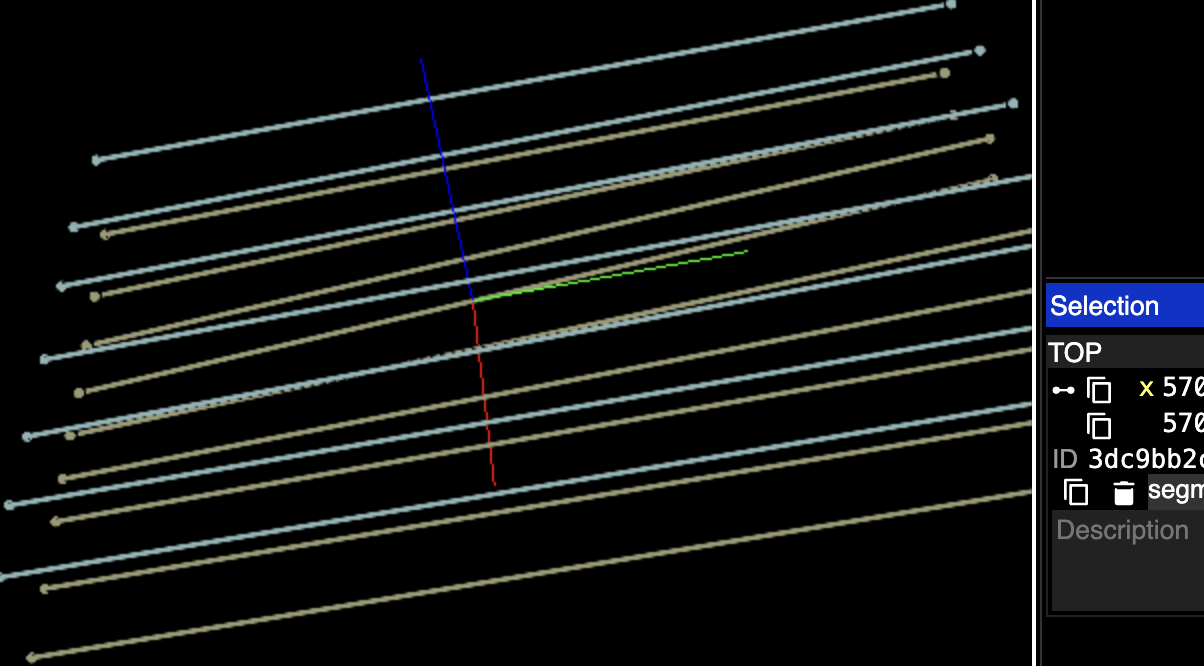
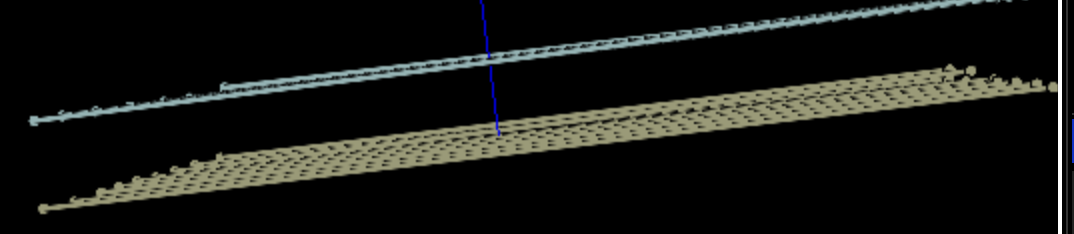
After thinkering a bit about i found a soluttion that i think works better than the yellow box. did not manage to find the exsact cordinates. but give a good indication on if the segment touch dataset edge.
Also, if you want to set the coords to exact numbers, you can click this button: {} in the top right corner and edit the JSON state. There click the <–> button next to the “layers”. There you’ll find the data for each layer. Find the layers with annotations and there find your annotations. For each of them enter the values you want. After all the editing click the “Apply changes” in the top left corner of the popup to save the edits. It’s a bit of manual work, but can help tidy up things.
Are there in preparation any new datasets, in which we, the community, will be able to participate? Not that I’m complaining about not having enough things to do just asking.
Also, what’s up with Neo/Pyr? Will it even come out or it turned out, there just weren’t enough pyramidal neurons to work with to make all the design, programming and other things worth it?
Hey! Nice to see this post. Would it be of interest if we set up a town hall to talk about future directions of connectomics and also introduce all the current/upcoming datasets?
There are early access datasets that are technically open to proofreading on pyr.ai https://pyr.ai/ and a retina dataset being called EyeWire 2 https://eyewire.ai/, currently in research preview with a few labs from around the world. You’ll recognize that the website format is a clone of FlyWire, so you also already know how the proofreading works. We haven’t advertised this because the interface is neuroglancer and spreadsheets. But maybe there is a way to make it easier for Eyewirers to make the jump from eyewire.org to eyewire.ai. Love to hear your thoughts!
Ok, so nothing new (as not seen before) yet. We’ve already did some mossy fibers (MFs ) and other cells in Pyr and some SACs in EW2. I was kinda hoping, something entirely new is “secretly” being prepared.
So, I guess, back to fixing issues in the left Lamina and Medulla in FlyWire .


 just asking.

 .
.